|
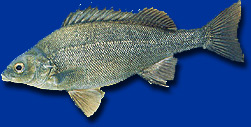
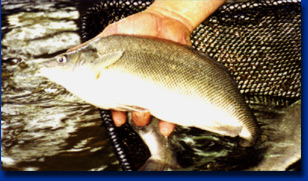 Silver
Perch are the sleeping giant of world aquaculture. If Silver Perch are
purged and handled properly they are equal to any other white flesh
fish. The fish on Pioneer Fish Farm are handled with extreme care so
that they arrive at our purging facility with no stress inflicted on
them. They then spend a minimum of 7 days in our crystal clear, bio-filtered,
tank system. After the Silver Perch have been purged (we use 10ppth
salt water) they are then ready for Market. At all stages of growing,
harvesting and purging we are able to control the circumstances and
enviroment that our fish live in. This lets us guarantee the product
that reaches our markets is of the highest quality available. Silver
Perch are the sleeping giant of world aquaculture. If Silver Perch are
purged and handled properly they are equal to any other white flesh
fish. The fish on Pioneer Fish Farm are handled with extreme care so
that they arrive at our purging facility with no stress inflicted on
them. They then spend a minimum of 7 days in our crystal clear, bio-filtered,
tank system. After the Silver Perch have been purged (we use 10ppth
salt water) they are then ready for Market. At all stages of growing,
harvesting and purging we are able to control the circumstances and
enviroment that our fish live in. This lets us guarantee the product
that reaches our markets is of the highest quality available.
The Silver
Perch has some fantastic health and nutrition aspects about its flesh.
In recent studies conducted by organisations including the CSIRO have
found that Silver Perch have very high levels of OMEGA-3 fatty acids,
placing them in the top 5 fish species in Australia. This means not
only does this fish taste great, it is also very good for your health.
The following
is an excerpt from WA Fisheries on the Silver Perch.
Scientific
Name
Bidyanus bidyanus
Other
Common Names
Grunter, Murray perch, black bream, silver bream, bidyan
Size
Commonly to 410 mm; to 600 mm, 8 kg
Conservation
Status
Vulnerable
 Habitat Habitat
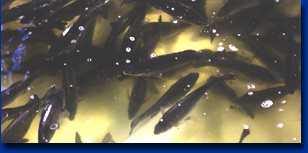
Schools in large numbers sometimes seen near the surface. In summer
often congregates below rapids and weirs. Prefers warmer sluggish waters
with debris cover.
Distribution
Once very common throughout the warmer waters of the Murray-Darling,
silver perch river numbers have dropped alarmingly in recent years.
No re-stocking program has yet been mooted for the river populations
and this has been blamed on lack of demand from the "client group",
ie anglers. This is hardly surprising, since the majority of silver
perch anglers fish impoundments, where they are plentiful.
Bred extensively
in the commercial sector and a popular warm water aquaculture and farm
dam species, silver perch are stocked heavily in impoundments, especially
in New South Wales and Queensland where it has gained a popular reputation
for "disappearing" after a few years. However, this is believed
to be due primarily to the change of diet experienced by larger silver
perch. Despite their reputation, silvers are caught in large numbers
by bank anglers using bait, in many of these impoundments.
Reproduction
Long spawning migration upstream in spring to areas behind peaks of
floods. Spawning takes place close to sunrise in spawning schools of
50 to 70 individuals in flooded backwaters of low gradient streams.
Little or no spawning in years with no floods, eg drought years.
Diet
Shrimps, Yabbies and aquatic insects, believed to change to a mainly
vegetarian diet in larger fish.
Angling
An excellent fighting fish, silver perch are a popular target for many
anglers. Because of their small mouth, smaller baits and lures a best.
The best bait by far is freshwater shrimp, followed by scrubworms.
Anecdotally,
one effective method when boat fishing for silvers in rivers is to find
a tree fallen in the river with most of its smaller branches and twigs
intact and to drive the boat into it a few times to shake up the shrimp.
This reputedly stirs up the silvers something ferocious for about 15-20
mins during which time a shrimp on the hook is a good bet for a silver.
Different
size and bag limits apply in the various States.
On
the Table
Smaller fish (less than about 1.5 Kg) are good eating. Larger fish are
better if skinned and can have a "weedy" taste.
|